
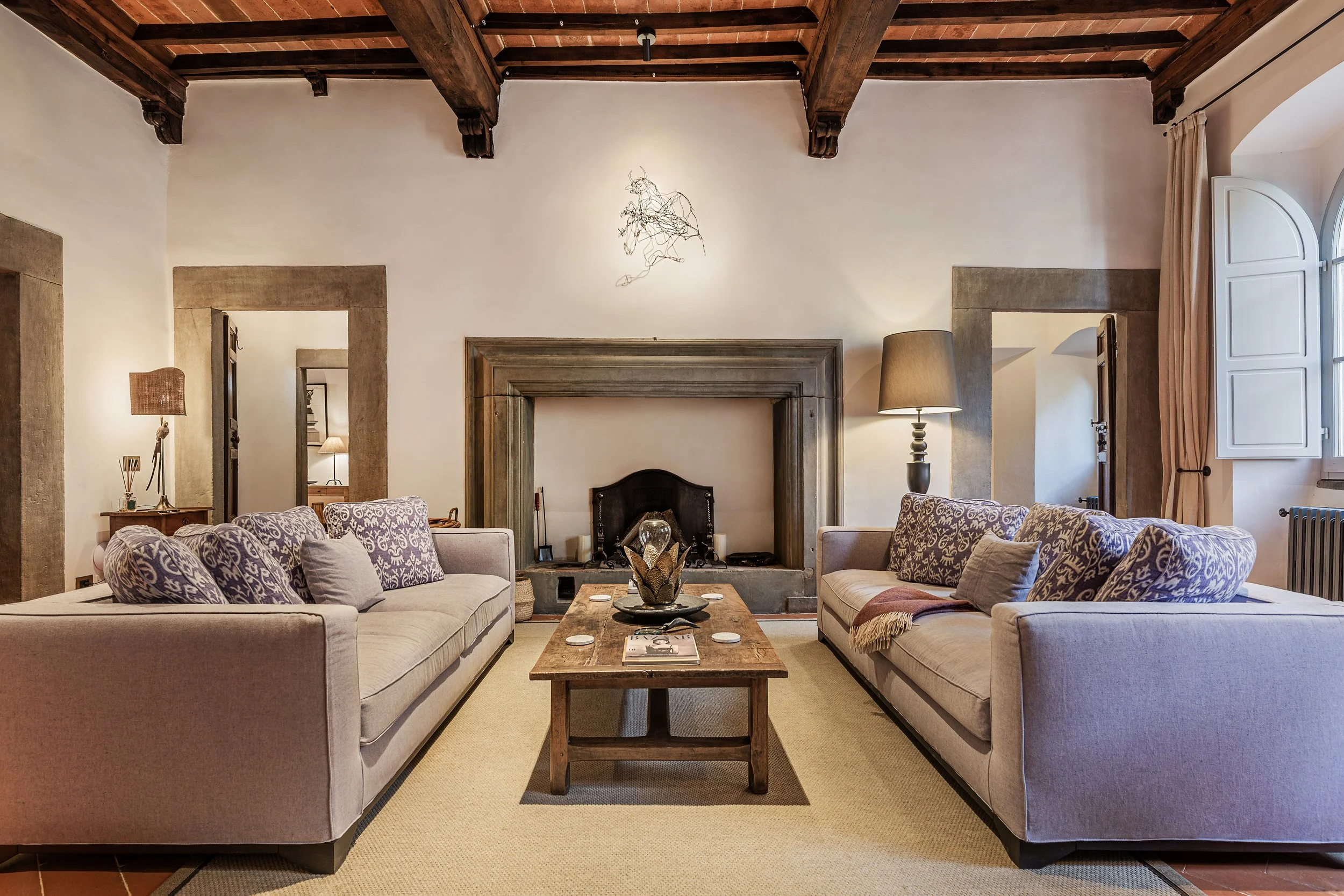
What Actually Happens, Stage by Stage
The single question we hear most from people looking at old houses in Tuscany and Umbria is whether they will be allowed to do what they have in mind. The honest answer depends on three things: whether the building itself is protected, whether the surrounding land is protected, and what the local plan says. Italian planning law is layered, with national rules, regional laws and each comune’s own plans, but once you understand the layers it becomes far more predictable.
This guide sets out how it works in practice for anyone restoring a historic house. It is general information, and every project needs its own professional advice, but it should help you ask the right questions before you buy.
Layer one: Is the building itself listed?
Italy’s national Code of Cultural Heritage and Landscape (Legislative Decree 42 of 2004) protects buildings of historic or artistic interest. A privately owned building becomes a protected cultural asset through a formal declaration recorded against the property. Many grand townhouses, villas, chapels and churches are covered; most farmhouses are not, although some are.
If the building is listed, any work on it needs authorisation from the Soprintendenza, the Ministry of Culture’s local heritage office, under article 21 of the Code. For Cortona and the province of Arezzo, that is the Soprintendenza for Siena, Grosseto and Arezzo; for Umbria, it is the regional Soprintendenza in Perugia. The application sets out the project in detail, and structural or seismic works must include a seismic risk summary.
The Soprintendenza has 120 days from receiving the request to decide. That clock can be suspended if it asks for further documents, and there is no silent consent: if it hasn’t replied, you don’t have approval. In practice, a well-prepared application from an architect the office knows tends to move faster, and a pre-application meeting is often worthwhile.
What does the Soprintendenza look for? Broadly, work that respects the building's fabric, uses compatible materials, and can be undone later if needed. Lime rather than cement, timber windows rather than uPVC, repair before replacement, and careful recording of anything uncovered during the works. Frescoes, painted ceilings and original floors are treated as part of the building, and their conservation is usually a condition of approval.
Layer two: Is the landscape protected?
Separately from the building, much of rural Tuscany and Umbria lies within areas protected for their landscape value. Here, any work that changes the external appearance of a building, from a new window to a pool or a pergola, needs a landscape authorisation. The comune handles the application but the Soprintendenza gives a binding opinion, and minor works qualify for a simplified procedure.
This layer catches many buyers by surprise, because a house that is not listed can still sit in a protected landscape. A swimming pool, a new outbuilding, solar panels on a visible roof slope or a change of roof tile can all need landscape approval.
Layer three: what the comune’s plan allows
Every comune has its own planning instruments, which set out what you can do in each zone. Historic centres such as Cortona’s are usually subject to strict rules on facades, windows, colours and roofs, whether or not an individual building is listed. In the countryside, the plan decides whether agricultural buildings can become houses, whether extensions are possible and how much new floor area is allowed.
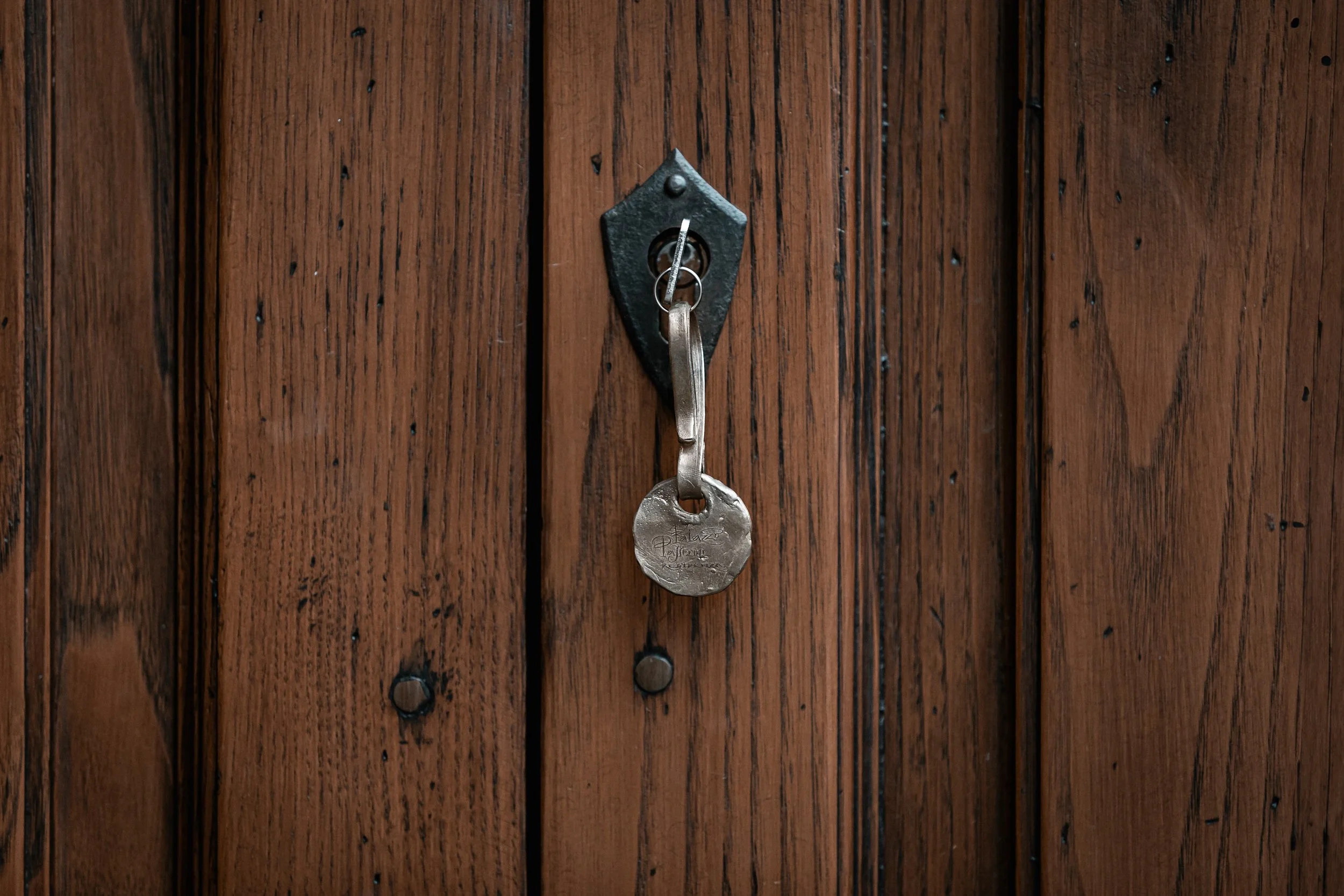
Original wooden door at Palazzo Passerini
The type of permit you need then depends on the scale of the work:
• CILA: a notification for internal work that doesn’t touch the structure, such as new bathrooms, kitchens and internal partitions
• SCIA: a certified notice for heavier work, including restoration and conservative repair and some structural work; you can usually start once it is filed, but the comune can object within 30 days
• Permesso di costruire: a full building permit for extensions, significant alterations and many changes of use
For a listed building, the Soprintendenza’s authorisation comes first and is attached to the comune application.
Tuscany: converting rural buildings
Tuscany’s planning law is Regional Law 65 of 2014, and it has specific rules for turning agricultural buildings into homes. A rural building whose construction began before 15 April 2007 can change to residential use where the comune’s plans expressly allow it. The owner signs a formal undertaking identifying the land that belongs with the building, and must either keep a minimum area of land attached or pay a contribution instead. If the building is demolished and rebuilt as part of the conversion, its floor area cannot be increased.
This matters a great deal when buying. A barn or former tobacco-drying tower may look like an easy extra bedroom, but if it cannot legally become living space, or only at a cost, that changes the value of the whole property.
Umbria: the regional framework
In Umbria, the equivalent framework is Regional Law 1 of 2015, the consolidated law on land use and building. The principles are similar, with protection of historic centres and the rural landscape, and permit routes that mirror the national system, but the details differ, and local plans in towns such as Montone, Umbertide, or Città della Pieve have their own rules. A local geometra or architect who works regularly with the comune is essential.
Earthquake rules
Both regions are seismically active, and any structural work, including strengthening walls or replacing a floor or roof structure, needs approval from the regional seismic office before it starts. In Umbria, that is the regional seismic risk service in Perugia; in Tuscany, it is the regional civil engineering office for the province. A structural engineer prepares the design, and it is often the longest single piece of paperwork for an old building. Seismic improvement is also, sensibly, something the Soprintendenza expects to see on a listed building.
Sorting out old irregularities
Many old houses have alterations that were never properly authorised: an enclosed loggia, a converted stable, a roof raised a few courses. These must be regularised before new permits are granted, and they must be addressed in the sale contract, which is why the pre-purchase checks in our guide to buying a property to restore are so important. The 2024 Salva Casa decree made some small discrepancies easier to resolve, but anything substantial still needs a formal application and sometimes a fine.
How long does it all take?
As a rough guide, a CILA takes days to prepare and file, a SCIA a few weeks, and a full permit anything from two to six months. Add up to 120 days for Soprintendenza authorisation on a listed building, plus seismic approval, and the permissions stage on a complex project can easily run six to nine months. Our guide to restoration stages and timescales shows where this fits in the overall programme.
How long does it take in total?
Adding up the stages gives roughly eighteen months for a straightforward project and three years for a complex one, with the permissions stage and the availability of craftspeople setting most of the pace. Palazzo Passerini took two years from shell to finished residence. La Casa Cappellina's restoration and extension is planned to start in 2027 and finish in 2028.
If you are weighing up a property, the next thing to understand is what it will cost: our guide to restoration and renovation costs per square metre sets out current figures.
Thinking of restoring a house in Tuscany or Umbria? Talk to Charles about your project.
Our view
The rules can feel restrictive, but they're why Tuscany and Umbria still look the way they do. At Palazzo Passerini, working within the Soprintendenza’s framework shaped a better house: original terracotta floors, stone fireplaces, and painted decoration were kept, and guests remember them.
Planning to restore a listed house in Tuscany or Umbria? Talk to Charles before you buy.